
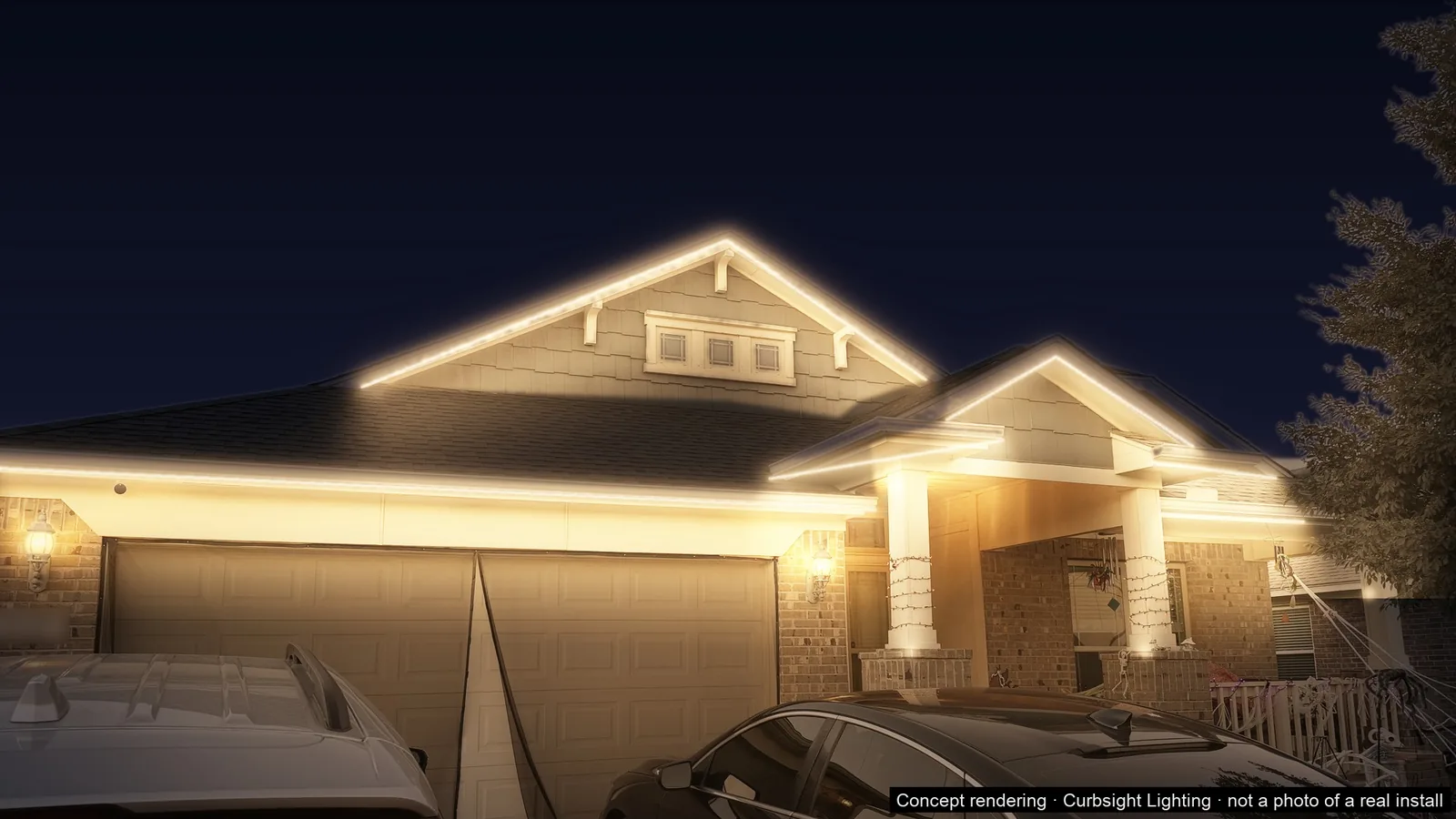
1. Pick one white, and keep it warm
Warm white around 2700 to 3000 K looks like lamplight. Mixing a cool porch bulb, a bluish garage light and warm roofline lights is the fastest way to make a house look cheap. Match every bulb on the front, including the porch and the coach lights.
2. Light two or three things, not everything
Choose what you want noticed: the roofline, the entry, one stone wall or one big tree. Light those well and leave the rest dark. See accent and highlight lighting.
3. Leave real darkness between them
Contrast is what reads as expensive. A lawn lit end to end looks like a parking lot. Shadows around the lit surfaces give the house depth.
4. Hide the light source
You want to see what's lit, not the bulb. Track tucked under the soffit, a continuous line behind a diffuser and fixtures aimed away from the street all hide the source. See dots vs a continuous line.
5. Make the entry the brightest point
The eye goes to the brightest thing. If that's the garage, the house reads as a garage. Set the front door a step brighter and dim the garage side.
6. Run it at 40 to 60 percent
Full brightness looks commercial. Most homes look best dimmed to about half, which also keeps the neighbors happy.
7. Save color for occasions
Warm white on ordinary nights and color on holidays and game days. A house that's purple on a Tuesday looks like a party, not an estate. See warm white vs color.
8. Put it on a schedule
On at sunset and off around midnight. Lights that run all night lose their effect, and some cities, like Nichols Hills, regulate outdoor lighting closely.
This is the look we call classic estate. Or take the quiz to find yours.