
Lighting · Glossary
Permanent lighting terms, explained
Soffit or fascia? Nodes or a continuous line? RGBW or RGBCCT? Here are 48 lighting terms in plain English, each linked to the page that explains it in depth.
A · C · D · E · F · G · H · I · K · L · M · N · P · R · S · T · U · W · Z
A
- Accent lighting
- Light aimed at specific features, such as an entry, columns or a tree, instead of lighting everything evenly. More →
- Addressable
- LEDs that can each be set to a different color, so a line can show bands, chases and flowing effects. More →
- Apex (peak)
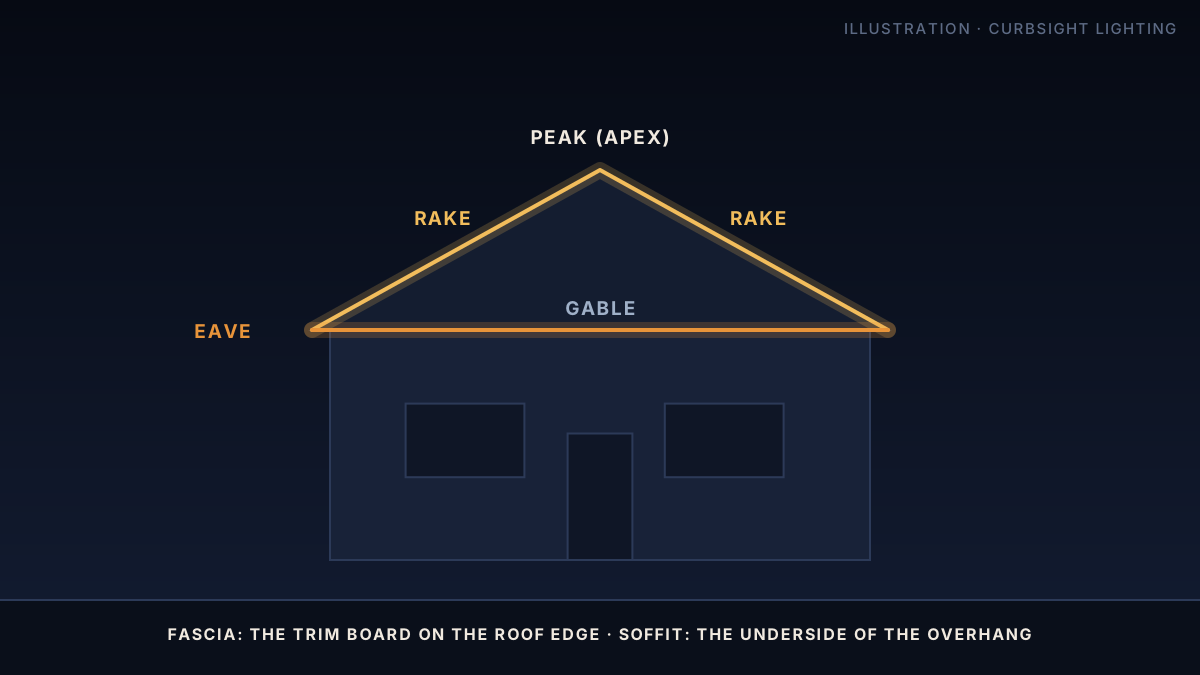
- The top point of a gable, where two angled roof edges meet. Peaks are the most visible part of a roofline.
C
- CCT (color temperature)
- How warm or cool white light looks, measured in kelvin (K). 2700 K is warm, like a lamp. 5000 K is cool, like daylight.
- Certificate of Appropriateness
- The approval Oklahoma City's historic preservation districts require before exterior changes, permanent lighting included. More →
- Class 2 power supply
- A power-limited low-voltage supply (100 watts or less per output) listed for safety. Low-voltage lighting usually runs on these.
- COB (chip on board)
- An LED strip with hundreds of tiny chips per foot under a coating, so it glows as a continuous line instead of dots. Brightness varies a lot from one maker to the next, so compare lumens per foot. More →
- Continuous line
- Lighting that reads as one unbroken line with no visible dots, from COB strip or neon flex behind a diffuser. More →
- Controller
- The box that runs the lights and connects to the app. It holds the scenes and schedules.
- CRI (color rendering index)
- How true colors look under a light, on a scale to 100. CRI 90+ makes skin, stone and paint look natural.
D
- Dark-sky lighting
- Outdoor lighting designed to limit glare and upward light: shielded, aimed down and warm. Nichols Hills' code follows these principles. More →
- Diffuser
- The frosted cover over an LED strip that blends the individual LEDs into one even line.
- Downlighting
- Light aimed downward from above, such as from under an eave or from a tree. More →
E
- Eave
- The lower edge of the roof that overhangs the wall. Eave lighting runs along it. More →
F
- Facade lighting
- Light on the front face of a building: washing, grazing or outlining it. More →
- Fascia
- The trim board along the edge of the roof, often behind the gutter. Permanent lighting mounts here or on the soffit, never on the shingles. More →
- Footcandle
- A measure of how much light lands on a surface. Light-trespass rules set limits in footcandles at the property line.
G
- Gable
- The triangular wall under a pitched roof's two sloping edges.
- Grazing
- Light placed close to a wall and aimed along it, so texture like stone or brick casts shadows. More →
H
- HOA architectural review
- The approval many homeowners associations require before exterior changes, permanent lighting included. More →
I
- IP rating
- Ingress Protection: how well a fixture keeps out dust (first digit) and water (second digit). IP67 survives brief submersion.
K
- Kelvin (K)
- The unit for color temperature. Lower numbers are warmer.
L
- Landscape lighting
- Lighting for the yard: paths, trees, walls and steps. More →
- Light trespass
- Light that spills onto a neighbor's property. Some cities limit it, like Nichols Hills at 0.2 footcandle at the property line. More →
- Low voltage
- Lighting that runs on 12 or 24 volts from a power supply instead of 120-volt house power. It's safer to install and handle.
- Lumens
- How much light a source puts out in total.
M
- Moonlighting
- Fixtures mounted high in a tree, pointing down, so the ground below looks lit by the moon. More →
N
- Neon flex
- A flexible silicone tube with LEDs inside that glows like glass neon. It's used for continuous lines and signs. More →
- Node (puck)
- A single sealed LED light. Most permanent-lighting brands use rows of nodes, spaced about a foot apart. More →
P
- Path lights
- Low fixtures that light a walkway or drive from above the ground. More →
- Permanent lighting
- Lighting that stays installed on a house year-round and is controlled from an app, instead of hung and taken down each season. More →
- Pixel
- One individually controllable point of light on an addressable strip.
- Power injection
- Feeding power into a long run at more than one point, so the far end is as bright as the near end.
R
- Rake
- The angled roof edge running up the side of a gable. Lighting the rake fascia traces the roof's shape without touching the roof.
- RGB
- Red, green and blue LEDs mixed to make colors. Whites mixed from RGB tend to look bluish.
- RGBCCT
- RGB plus warm and cool white LEDs, so the white can be tuned from warm to cool.
- RGBW
- RGB plus a dedicated white LED, for a cleaner white than mixed color.
- Roofline lighting
- Lighting along the edges of the roof, in a track under the eave or on the fascia. More →
S
- Scene
- A saved look (colors, brightness, effect) you can switch on with a tap or a schedule. More →
- Schedule
- Automatic on and off times for scenes, often sunset to a set time, or tied to dates for holidays. More →
- Shielding
- A fixture design that hides the light source from view, so you see the light it casts, not the glare.
- Soffit
- The underside of the roof overhang. Lights mounted here wash down onto the walls. More →
T
- Track (channel)
- The slim aluminum rail that holds the lights and hides the wiring. It's color-matched to the trim. More →
- Tunable white
- White light you can set anywhere from warm to cool, or that warms as it dims. More →
U
- Uplighting
- Light aimed up from the ground at a tree, column or wall. Some cities, like Nichols Hills, don't allow it. More →
W
- Wall washing
- Even light spread across a whole wall. More →
- Warm white
- White light around 2700 to 3000 K, like a lamp. It flatters homes and is what most permanent lighting runs most nights.
Z
- Zone
- A section of the lights you can control separately, such as the front, the garage or the back.

See it on your own place first.
Send a photo for a free night mockup, or I'll come walk it with you at dusk.
Or reach me directly: 405-706-6042 (call or text) or [email protected].